The OG Songster
In 1889, a young Ludwig Koch pointed an Edison wax cylinder at a captive bird and made what is still reckoned the earliest surviving recording of a bird. It was a shama.
Some birds you find by sight; this one you find by ear. It is, by wide agreement, one of the finest songsters in the Indian forest with a rich, endlessly inventive voice that borrows freely from its neighbours and stitches their calls into phrases of its own.
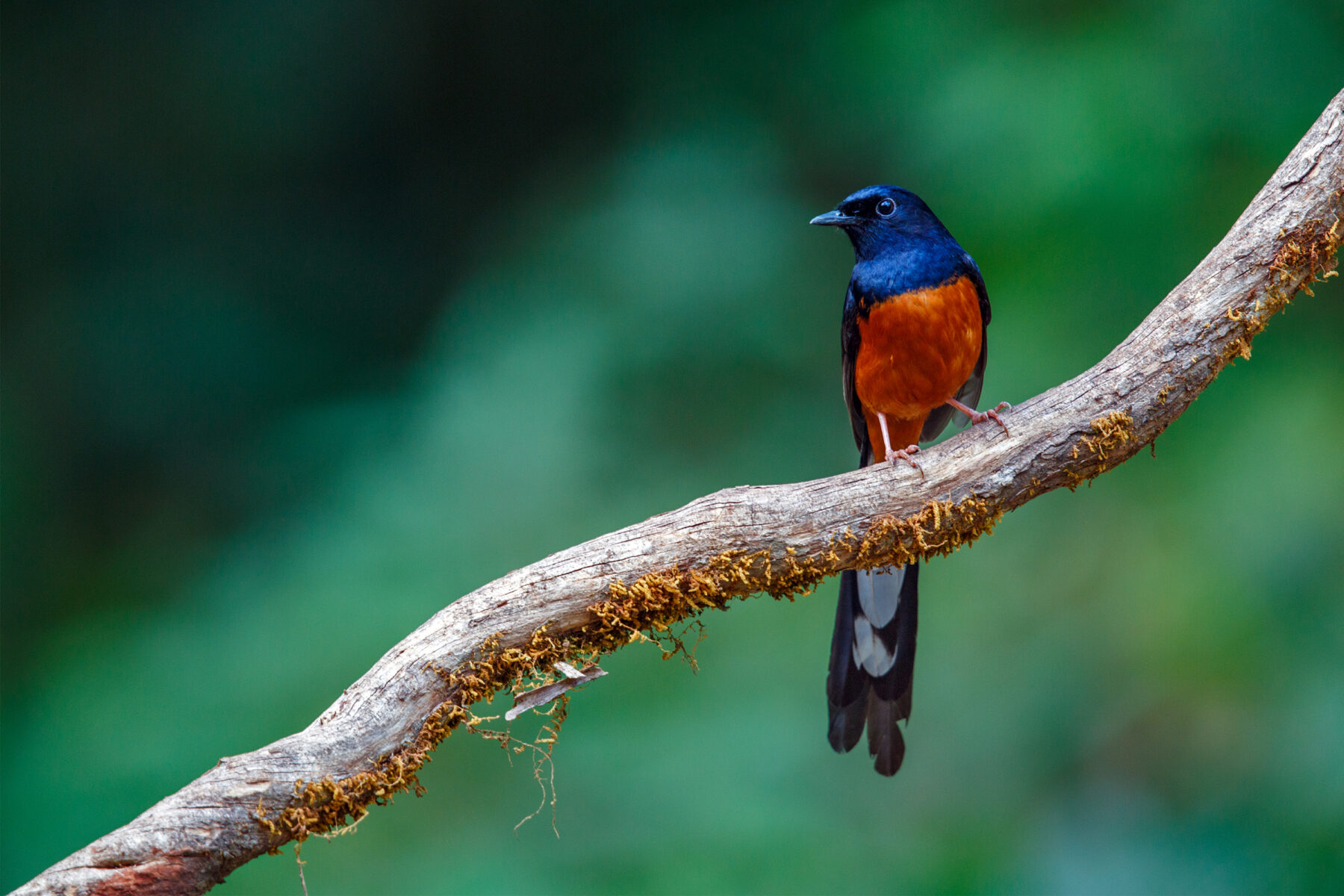
The male wears the part — glossy blue-black over the head and back, a deep chestnut breast, and a long graduated tail he flicks and fans as he sings. The white rump that gives it the name stays tucked away here, but the pied tail streams down the branch like a signature.
The species name malabaricus points home: the type specimen came from the Malabar Coast, and the Western Ghats remain its stronghold.
This one sat out in the last of the light at Ganeshgudi. He didn’t sing for me. He didn’t need to; he’d already said everything by simply being there.
See What I Saw — in your inbox.
Capture details
- Camera
- Canon EOS 5D Mark III
- Lens
- EF400mm f/2.8L IS USM +2x III
- Aperture
- f/5.6
- Shutter
- 1/15 s
- ISO
- 800
- Focal length
- 800mm
- Date
- 7 Mar 2015
- Location
- Ganeshgudi